

Winter Self-Massage: A Simple Ritual for Warmth & Grounding
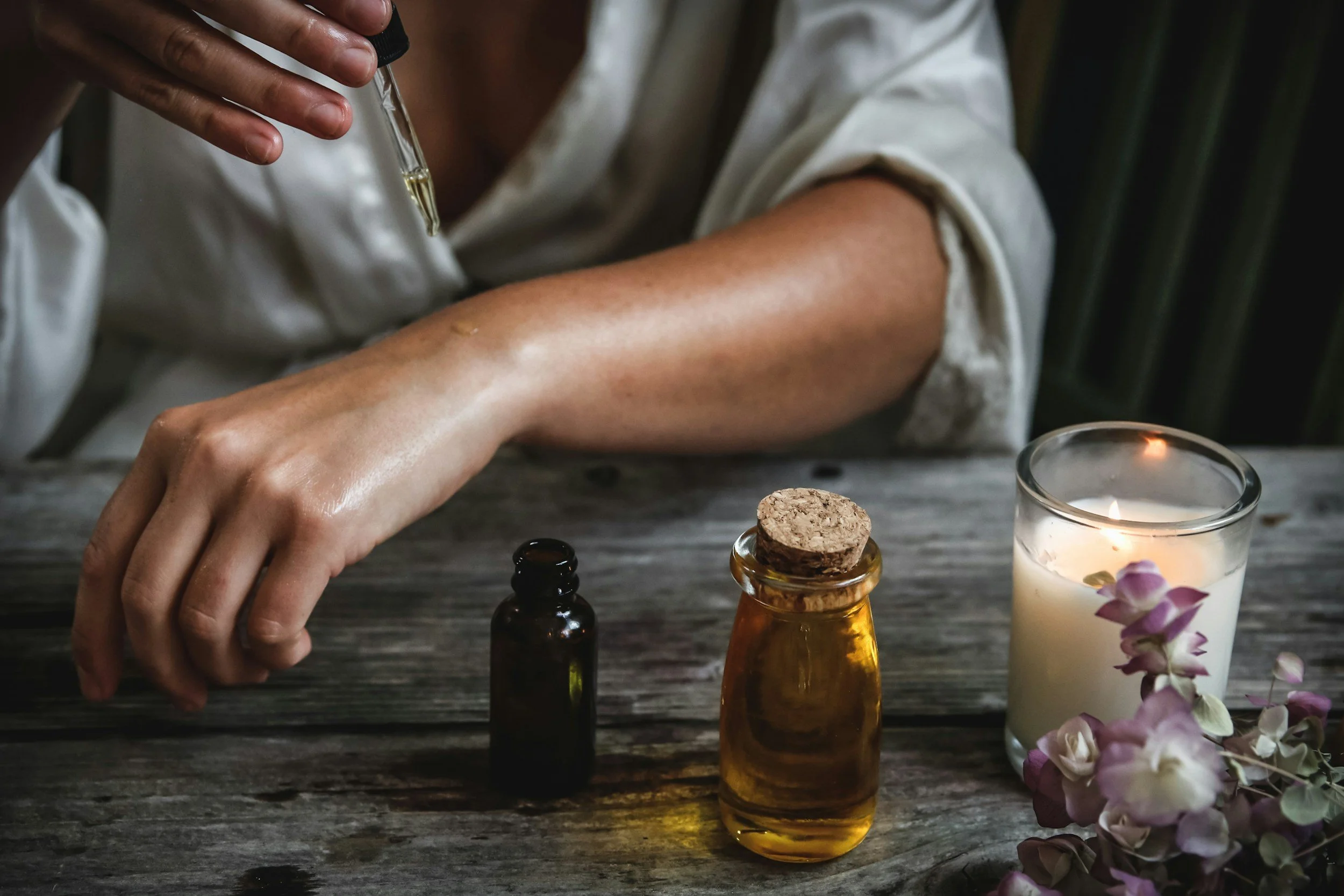
Winter naturally draws us inward. Colder temperatures, shorter days, and fuller schedules can leave the body feeling dry, tense, or overstimulated. One of the simplest ways to counterbalance this — and to reconnect with yourself — is self-massage, traditionally known as abhyanga.
At its heart, self-massage is not about technique or perfection. It’s about slowing down, offering care, and restoring warmth and circulation through intentional touch.
What Is Self-Massage (Abhyanga)?
Self-massage is the practice of applying warm oil to the body using slow, mindful strokes. It can take anywhere from 5 to 20 minutes and can easily be adapted to fit your daily (or weekly) life.
This Ayurvedic ritual has been used for centuries as a way to:
Support the nervous system
Keep the skin nourished and hydrated
Create a sense of grounding and embodiment
Even practiced occasionally, self-massage can be deeply regulating, especially during winter months.
Why Self-Massage Is Especially Supportive in Winter
During winter, many people notice:
Increased dryness in the skin and joints
A feeling of tightness or stiffness
Heightened stress or restlessness
Fatigue from colder, darker days
Self-massage helps by:
Warming the body and improving circulation
Hydrating the skin and supporting its natural barrier
Calming the nervous system through steady, rhythmic touch
Encouraging rest and better sleep
Touch is one of the most direct ways to signal safety to the body. When we slow down and offer care through our own hands, the entire system benefits.
A Simple Winter Self-Massage Practice
You don’t need special tools or a lot of time. Here’s a gentle way to begin:
What You’ll Need
A small amount of oil (sesame, almond, or jojoba work well)
A warm, cozy, quiet space
Old clothing or a towel you don’t mind getting a little oily
How to Practice
Warm a small amount of oil in your hands by rubbing the palms together.
(Option to add a few drops of essential oils to your carrier oil. Good for winter: ginger, rosemary, lavender, sandalwood)Begin at the feet, using slow, steady strokes.
Move upward through the legs, arms, belly, chest, and neck, massaging towards the heart.
Use circular motions around joints and long strokes along the long bones.
Finish with a gentle scalp or face massage if time allows.
There’s no need to rush. Even five minutes is enough to create a shift. Afterward, you can sit in meditation or rest for a few quiet moments.
Tips for adding this to your morning routine: Do this right when you wake up, then sit for 20 minutes to let the oils settle, then shower. The hot water opens your pores and all the hydration from the oil soaks in.
Tips for adding to your nightly routine: About 30-60 minutes before going to bed, massage your feet with warm oil and cover with cozy socks. This is a great time to turn off the devices, grab a book, and head for bed with a hot cup of water. So soothing!
Making It Sustainable
Rather than treating self-massage as another task, think of it as:
A daily or weekly ritual
A way to transition into awakening and/or rest
A moment of care on especially cold or busy days
Consistency matters more than duration. A little, done regularly, goes a long way!
Ritual Kits to Support Your Practice
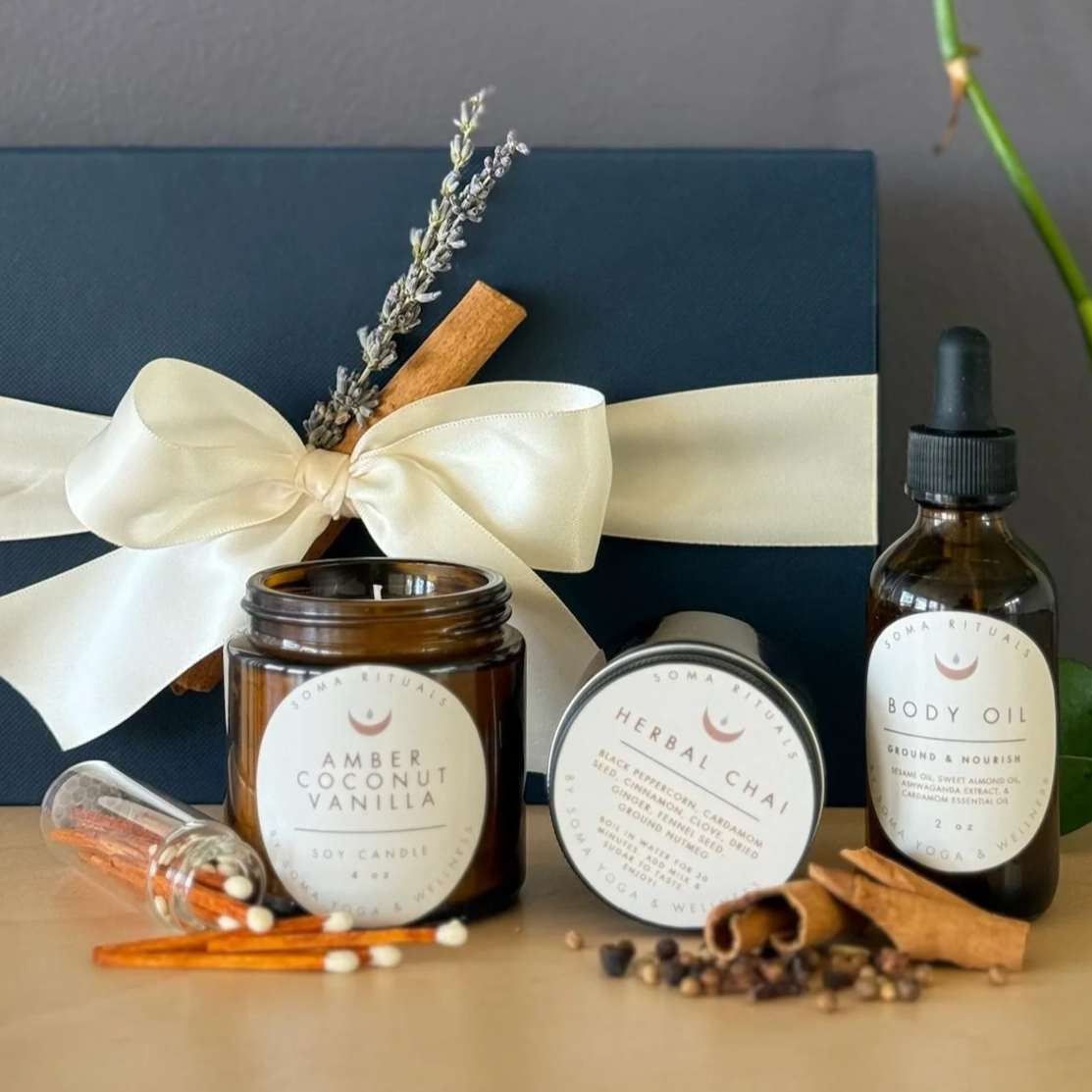
If creating space for self-massage feels appealing but hard to initiate, having simple tools on hand can make all the difference.
At Soma, we’ve created Ritual Kits to support gentle, home-based practices like self-massage, rest, and reflection — especially during winter.
Each kit is designed to help you:
Slow down without overthinking it
Create a sensory cue for rest and care
Turn everyday moments into intentional rituals
Our Ritual Kits pair beautifully with practices like self-massage, breathwork, and gentle movement, offering a tangible way to bring what you experience in the studio into your home.
You’ll find them available in the studio for the winter season, and we’re always happy to share ideas for how to use them.
Bringing This Practice Into Your Yoga
Self-massage pairs beautifully with gentle movement, restorative yoga, and breathwork. It can help your body feel more receptive, grounded, and supported — both on and off the mat.
This winter, consider letting care lead the way.
If you’d like support in creating rhythms and rituals that feel sustainable, we invite you to practice with us in class, explore our Ritual Kits, and join us at our seasonal gatherings.
